I used to be a meditation app person. Headspace, Calm, Insight Timer—I cycled through them all like someone swiping through dating profiles, always looking for the perfect voice, the perfect session length, the perfect background sound. My phone sat next to my cushion every morning, screen glowing, waiting to guide me through another ten minutes of “finding my breath.”
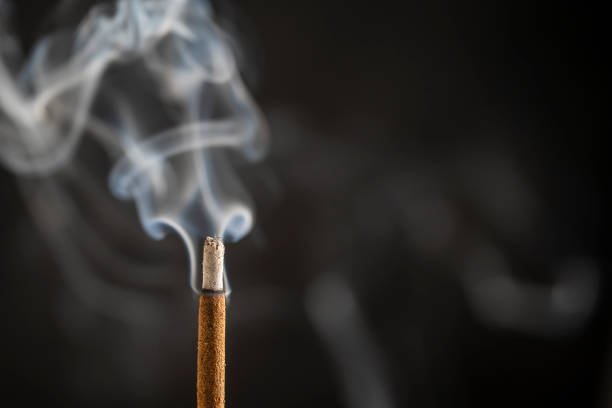
Then one November morning, after my third app crashed mid-session, I did something that changed everything: I lit a stick of sandalwood incense, set my phone in another room, and sat down with nothing but rising smoke and silence.
That was two years ago. I haven’t opened a meditation app since.
This isn’t a story about how apps are bad and incense is good. It’s about how I discovered something I didn’t know I was missing—a physical, sensory anchor that my screen-saturated brain desperately needed. If you’ve ever felt like meditation should work for you but somehow doesn’t quite land, maybe my experience will resonate.
The App Trap I Didn’t Know I Was In
Let me be clear: meditation apps aren’t the enemy. They introduced millions of people to contemplative practice, myself included. When I started meditating five years ago, Headspace’s animations and Andy’s friendly voice made the whole thing feel approachable. I was grateful.
But somewhere along the way, my meditation practice became another form of consumption.
I’d spend the first few minutes of my “meditation time” scrolling through session options. Should I do the anxiety series today or the focus one? The 10-minute or 15-minute? The ocean sounds or the forest? By the time I actually started sitting, my mind was already in consumption mode—receiving, evaluating, clicking.
And then there was the phone itself. Even in airplane mode, even face-down, my phone radiated a kind of potential. Notifications could be waiting. Emails could be piling up. The world could be happening without me. Some part of my brain never fully relaxed because the portal to everything was right there, inches from my knee.
I didn’t realize how much this was affecting my practice until I removed it entirely.
The Accidental Discovery
The incense wasn’t part of some grand plan. A friend had brought me a small bundle of Chinese sandalwood sticks from her trip to Hangzhou—a casual gift, nothing special. They sat in my desk drawer for months.
The morning my app crashed, I was frustrated and tired but still wanted to sit. I remembered the incense, found an old ceramic dish to catch the ash, and figured I’d try something different.
What happened next is hard to describe without sounding dramatic, but here goes: within thirty seconds of the smoke rising, my body relaxed in a way it hadn’t during months of guided sessions.
Not because sandalwood has magic properties. Not because I suddenly became enlightened. But because for the first time, my meditation had a beginning that wasn’t a glowing screen, a middle that wasn’t someone else’s voice, and an end that wasn’t a chime followed by a subscription prompt.
The incense burned. I breathed. That was it.
What Incense Does That Apps Can’t
After that first session, I started paying attention to what was actually different. Here’s what I’ve noticed over two years of morning sits with Chinese incense:
It Marks Time Without Counting It
One of my biggest struggles with meditation was clock-watching. Even with my eyes closed, I’d find myself wondering: How long has it been? Is this almost over? Should I peek at the timer?
With incense, time becomes visible but not intrusive. The stick shortens. The smoke continues. When it’s done, it’s done. There’s no countdown, no progress bar, no percentage complete. Just a gradual, natural ending.
A standard Chinese incense stick burns for about 20-30 minutes—long enough for a substantial sit, short enough for a weekday morning. I’ve stopped thinking about time entirely. When the smoke stops, I open my eyes. Simple.
It Gives My Senses Something Real
Here’s a confession: during guided meditations, I often felt like I was pretending. “Notice your breath,” the voice would say, and I’d think, “I’m noticing it. Am I noticing it right? What does noticing even mean?”
Incense gave my wandering attention something concrete. The scent isn’t imaginary—it’s there, changing subtly as the stick burns, sometimes stronger when a small draft passes, sometimes barely perceptible. My mind has something real to return to, not an abstract concept of breath-awareness but an actual sensory experience.
This might sound like cheating. Isn’t meditation supposed to be about transcending sensory experience? Maybe at advanced levels. But for those of us still working on basic presence, having a genuine anchor helps more than I can express.
It Creates Ritual Without Religion
I’m not Buddhist. I’m not Taoist. I’m not particularly spiritual in any organized way. For years, this made me feel like an imposter in meditation spaces—like I was borrowing something that wasn’t mine to use.
Chinese incense gave me ritual without requiring belief.
The lighting itself became meaningful: striking the match, waiting for the flame to catch, watching the first curl of smoke rise. It’s a transition, a clear signal to my body and brain that we’re shifting modes now. No app notification can replicate that physical act of beginning.
Traditional Chinese scholars used incense exactly this way—not always for religious purposes, but as a tool for clearing the mind before study, writing, or contemplation. Knowing this made me feel less like a spiritual tourist and more like someone using a tool the way it was designed to be used.
It Keeps My Phone in Another Room
This one is obvious but worth stating: you can’t scroll while lighting incense. You can’t check notifications while watching smoke. The very nature of the practice requires your phone to be elsewhere.
After two years, I’ve noticed this has effects beyond my morning sit. My relationship with my phone has generally loosened. The meditation-without-phone practice seems to have trained my brain that important things can happen without a device present.
The Learning Curve (Yes, There Was One)
I don’t want to pretend this was instant transformation. The first few weeks with incense had their own challenges.
Problem: The Smoke Was Too Strong
My first attempts involved burning incense in a small, poorly ventilated room. I’d end up with watery eyes and a headache instead of calm clarity. Not exactly the goal.
The fix was embarrassingly simple: crack a window, even slightly. Chinese incense is designed to be burned in spaces with some airflow—traditional Chinese architecture often included this naturally. In a modern apartment, you need to create it intentionally.
I also learned that quality matters enormously. Those gas station incense sticks that smell like a perfume factory exploded? That’s not what we’re talking about. Traditional Chinese incense, made from actual wood powder and natural binders, produces smoke that’s present but not aggressive. The difference is like comparing a scented candle from a dollar store to actual flowers.
Problem: I Didn’t Know What to “Do”
Without a voice telling me to scan my body or visualize a peaceful lake, I felt lost at first. What was I supposed to do for twenty minutes?
The answer, I eventually realized, was nothing—or rather, anything. Sometimes I followed my breath. Sometimes I watched the smoke. Sometimes I just sat there feeling the weight of my body on the cushion. The incense wasn’t a guided program; it was simply company.
This was harder than it sounds. My app-trained brain kept waiting for instructions. It took maybe two weeks before I settled into the freedom of an unstructured sit.
Problem: My Partner Thought It Smelled Weird
True story. My first incense was a heavily camphor-forward blend that my partner described as “medicinal at best.” We had some discussions.
The solution was finding gentler entry points. Sandalwood is almost universally pleasant to Western noses—warm, woody, slightly sweet. Starting there, I gradually introduced other scents. Now my partner actually requests certain blends for evening relaxation.
If you live with others, communication and gradual introduction help. Maybe start with your incense practice when they’re not home, then transition to shared spaces once you’ve found scents everyone can tolerate.
Choosing Your First Incense (Keep It Simple)
If you’re curious about trying this, here’s what I wish someone had told me:
Start with Sandalwood
Not because it’s the “best” Chinese incense—there’s no such thing—but because it’s the most forgiving. Sandalwood (tanxiang 檀香) is warm and familiar, almost like vanilla’s sophisticated cousin. It won’t challenge your nose or your family’s patience.
Look for incense marked as “pure sandalwood” or “100% natural.” Traditional Chinese incense uses wood powder as both the scent source and the main material, held together with natural bark binders. If an ingredient list includes “fragrance” or “perfume,” that’s synthetic—not what we’re going for.
Get a Simple Holder
You don’t need anything fancy. A small ceramic dish with some rice or ash to catch the debris works fine. I used a coffee cup saucer for my first six months.
Eventually, I invested in a proper incense holder—a simple ceramic piece with holes for inserting sticks. It cost less than one month of my old app subscription.
One Stick, One Sit
Don’t overcomplicate it. One stick. One session. Light it, sit until it finishes, done.
You don’t need to combine multiple incense types. You don’t need special cushions or altar setups. You don’t need to bow or chant or anything else unless you want to. The incense is a tool, not a religion.
What My Practice Looks Like Now
Two years in, my morning routine has settled into something sustainable:
I wake up, make tea, and take it to the corner of my living room where I keep my cushion and incense supplies. I select a stick—usually sandalwood for regular mornings, sometimes something lighter if I woke up already feeling calm.
I light the stick, watch the flame catch, blow it out gently. The first curl of smoke rises.
I sit. Sometimes I close my eyes. Sometimes I watch the smoke for a while before closing them. Sometimes I never close them at all.
When the incense finishes, I notice the silence of the non-burning. I open my eyes if they were closed. I sit for another minute or two, just feeling the transition.
Then I start my day.
Total time: usually 25-30 minutes, depending on the stick. No decisions, no screens, no voices. Just smoke and silence and whatever happens in my mind during that space.
The Unexpected Benefits
Beyond the meditation itself, I’ve noticed some changes I didn’t anticipate:
My Attention Span Has Improved
I can read for longer periods without reaching for my phone. I’m not sure if this is directly related to the incense practice or just the result of having one daily experience that’s completely analog, but the correlation is strong.
I’ve Developed Seasonal Rhythms
Different incense for different seasons has become natural. Lighter, greener scents in spring and summer. Warmer, woodier blends in fall and winter. This has made me generally more aware of seasonal changes in a way I wasn’t when my practice happened entirely through a screen.
I’ve Reconnected with Physical Objects
This might sound strange, but my incense practice has made me more appreciative of physical things in general. The weight of a ceramic holder. The texture of a wooden match. The subtle variations between batches of the same incense. In a world of digital uniformity, there’s something grounding about objects that have individual character.
I Sleep Better
My evening routine now sometimes includes incense too—a calming blend about an hour before bed. Whether it’s the scent itself or just the signal it sends to my brain, I fall asleep faster on incense nights. No data to prove this, just consistent personal experience.
Is This Right for You?
I’m not trying to convert anyone. Meditation apps genuinely help many people, and if your current practice works, there’s no need to change it.
But if any of this sounds familiar—
- You feel like meditation “should” work for you but something’s missing
- Your phone’s presence during practice creates subtle tension
- You’ve cycled through multiple apps without finding one that sticks
- You want a practice with physical, sensory elements
- You’re curious about non-digital approaches to mental clarity
—then maybe it’s worth trying one stick of incense, one morning, just to see.
The investment is minimal. A bundle of decent sandalwood sticks costs less than a nice coffee drink. If it doesn’t resonate, you’ve lost nothing. If it does, you might find what I found: a practice that finally feels like it belongs to me, not to an app developer in Silicon Valley.
Frequently Asked Questions
Won’t the smoke bother my breathing during meditation?
Quality Chinese incense produces much less smoke than cheap synthetic alternatives. With proper ventilation (even just a cracked window), most people find it comfortable. If you have respiratory conditions, try sitting further from the incense or experimenting with low-smoke varieties. I have mild allergies and haven’t had issues with pure sandalwood.
Is this cultural appropriation?
I wrestled with this question. Here’s my perspective: Chinese incense was used by scholars, doctors, and ordinary households for practical purposes—focus, calm, atmosphere—not exclusively for religious ceremonies. Using it as a meditation tool follows a long tradition of secular application. Respect the origins, don’t pretend you’re doing something you’re not, and use it for its intended purpose: creating mental space.
How is this different from just burning any incense?
Traditional Chinese incense uses the wood powder itself as the main material, not a bamboo core coated with synthetic fragrance. This means the scent is more subtle, the smoke is cleaner, and the burning is more consistent. The quality difference is immediately noticeable.
What if I can’t meditate without guidance?
Start with both if needed. Light the incense, then listen to a short guided intro, then let the rest of the sit be silent with just the incense. Gradually reduce the guided portion over weeks. The incense gives you something to “do” even without instruction.
Can I use this for yoga practice?
Absolutely. The incense creates atmosphere whether you’re sitting still or moving. For yoga, you might want a slightly longer-burning coil instead of a stick, so it lasts through a full practice. Place it safely away from your movement area.
What about children or pets in the house?
Always burn incense in a space where curious hands and paws can’t reach it. Many people use elevated holders or burn incense during times when kids are at school or pets are in another room. Never leave burning incense unattended.
How do I know if incense is good quality?
Look for: single-ingredient or simple ingredient lists, matte (not shiny) texture, subtle rather than overwhelming scent when unlit, and ash that’s relatively clean. Avoid: anything with “fragrance” or “perfume” in ingredients, sticks that feel plasticky or glossy, and scents that give you a headache or feel chemical.
One Stick, One Sit
If you’ve read this far, you’re probably at least curious. Here’s my suggestion: don’t overthink it.
Get a simple bundle of sandalwood sticks—I’ve linked some options I trust below. Find a ceramic dish or old saucer. Pick a morning when you have twenty minutes.
Light the stick. Sit down. See what happens.
Maybe nothing revelatory will occur. Maybe you’ll just sit there feeling a bit awkward while smoke drifts around you. That’s fine. That was my first time too.
But maybe—just maybe—you’ll discover what I discovered: that somewhere in the gap between an ancient curl of smoke and a modern anxious mind, there’s a kind of peace that no algorithm can generate.
The apps will still be there if you want to go back. But I suspect you won’t.
Have you tried meditating with incense? I’d love to hear about your experience—the successes and the struggles. Drop a comment below, or share what scents have worked for your practice.