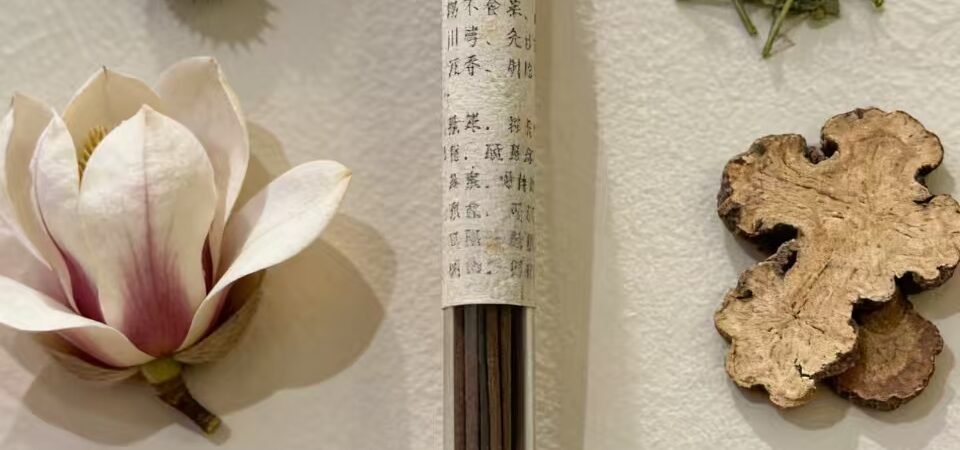
I once watched a man make incense for three hours without speaking.
He sat in a small workshop in Fujian province, surrounded by wooden bowls of powder in varying shades of brown and gold. His hands moved with the kind of ease that comes only from decades of repetition—measuring by feel, mixing by instinct, rolling each stick between his palms with a rhythm that seemed almost musical.
When I finally asked how long he’d been doing this, he looked up as if noticing me for the first time. “My father taught me,” he said. “His father taught him.”
That afternoon changed how I think about the incense I burn at home. Every stick carries someone’s hands, someone’s knowledge, someone’s inheritance. The question is whether we’re paying attention.
What “Artisan” Actually Means
Words like “artisan” and “handcrafted” get thrown around carelessly these days. Bread is artisan. Soap is artisan. The terms have been diluted to near-meaninglessness.
So let me be specific about what traditional Chinese incense craftsmanship involves—and why it produces something genuinely different.
The Raw Materials
Artisan incense begins with whole ingredients. Not fragrance oils. Not synthetic compounds. Actual aromatic woods, ground into powder.
The sandalwood comes from trees that grew for decades before harvest. The agarwood formed over years inside wounded trees, a slow alchemy of wood and fungus and time. These materials have weight—ecological weight, temporal weight, economic weight.
Mass-produced incense shortcuts this entirely. Synthetic sandalwood fragrance costs pennies per gallon. It smells approximately like sandalwood the way artificial strawberry flavor tastes approximately like strawberries. Close enough if you’ve never had the real thing. Obviously wrong if you have.
The Process
Traditional incense-making cannot be rushed.
The craftsman grinds raw materials to specific textures—some fine as flour, some slightly coarse for complexity. He blends them according to recipes passed down through generations, adjusting for variations in each batch of raw material.
The powder is mixed with water and natural binders—traditionally elm bark, which burns clean and holds the stick together without altering the scent. The mixture becomes a dough, worked until the consistency is right.
Then shaping: pressed through molds or rolled by hand, each stick formed individually. A skilled craftsman can produce hundreds of sticks per day. A factory can produce hundreds of thousands.
Finally, drying. This takes days or weeks depending on climate and thickness. Rush the drying and the sticks crack, burn unevenly, lose subtlety. There’s no way around time.
The Knowledge
Perhaps most importantly, artisan incense carries knowledge that exists nowhere in written form.
The craftsman in Fujian didn’t consult recipes. He knew—in his hands, in his nose, in some deeper place—when the mixture was right. This kind of embodied expertise takes years to develop and cannot be programmed into a machine.
When that generation of craftsmen dies, their knowledge dies with them unless it’s been transmitted to apprentices. This is happening now, across China—traditional skills disappearing as young people choose other careers.
Every stick of genuine artisan incense represents a living tradition. That tradition is more fragile than it appears.
The Difference You Experience
All of this might sound abstract—interesting history but removed from daily life. But the difference shows up concretely in the incense you burn.
The Scent Evolves
Artisan incense doesn’t smell the same from start to finish. As the stick burns, different compounds release at different temperatures. Top notes give way to heart notes, then base notes emerge. A twenty-minute burn tells a complete olfactory story.
Synthetic incense, by contrast, hits one note and stays there. Pleasant or not, it’s static. Like the difference between a photograph and a walk through actual landscape.
The Smoke Behaves Differently
Quality natural materials burn cleaner than synthetic alternatives. The smoke from artisan incense tends to be lighter, less acrid, less likely to trigger headaches or irritation.
I’ve had guests comment on this without knowing what they were noticing. “Your incense doesn’t bother me like most incense does,” they say. It’s not magic—it’s just better materials and proper craftsmanship.
The Ash Tells the Truth
After burning, artisan incense leaves soft, light-colored ash—gray or white, fine-textured, easy to clean. This indicates complete combustion of pure plant material.
Lower-quality incense often leaves darker, clumpier residue. Sometimes there’s a bamboo core left behind. These aren’t necessarily signs of terrible incense, but they do indicate different manufacturing approaches.
The Room Afterward
Perhaps the most telling difference: what lingers after the incense finishes.
Synthetic incense can leave a cloying residue that takes hours to dissipate—and sometimes never fully does. Fabrics absorb it. The scent becomes slightly stale.
Good artisan incense fades gracefully. The room smells pleasantly of wood for an hour or two, then returns to neutral. No residue, no staleness, no regret.
Finding Authentic Artisan Incense
Here’s the difficult truth: most incense marketed as “traditional” or “handcrafted” isn’t, or isn’t entirely.
The economics are challenging. Genuine sandalwood costs significantly more than synthetic fragrance. Hand-rolling takes time that machine production doesn’t. Small-batch drying requires space and patience.
Sellers who cut corners can offer lower prices. Sellers who don’t, can’t. This creates a market where authentic artisan incense often looks overpriced compared to alternatives that seem similar but aren’t.
What to Look For
Short ingredient lists. Traditional incense needs only aromatic wood powder and natural binder. If the list includes “fragrance,” “perfume,” or long chemical names, that’s a different product.
Matte appearance. Handcrafted incense looks rough and natural, not glossy or uniform. Machine perfection is a red flag, not a quality indicator.
Subtle unlit scent. Real wood-based incense smells gentle before lighting. If it’s overwhelmingly fragrant in the package, added oils are likely involved.
Reasonable pricing. This is counterintuitive, but genuine artisan incense costs more than mass-market alternatives. If “premium traditional sandalwood” costs the same as grocery store incense, something doesn’t add up.
Transparent sourcing. Sellers who actually work with traditional craftsmen usually talk about it—where the incense comes from, who makes it, what methods they use. Vagueness often indicates there’s nothing specific to say.
Starting Points
If you’re new to artisan Chinese incense, sandalwood remains the most accessible entry point. It’s familiar enough to be approachable, forgiving enough that even mid-grade versions are pleasant.
As your palate develops, agarwood offers the deepest exploration—complex, varied, and genuinely unlike anything else. Traditional blends introduce herbal and floral notes that single-wood incense doesn’t provide.
But start simple. One type, learned well, teaches more than a dozen types sampled superficially.
Why This Matters
I sometimes wonder if I’m being precious about all this. It’s just incense, after all. Does it really matter whether it’s handcrafted by a third-generation artisan or manufactured in a factory?
Here’s what I’ve concluded: it matters if meaning matters to you.
We live in a world of infinite, identical, instantly available everything. That abundance is a genuine good—but it comes with a loss. When everything is convenient, nothing is special. When everything is optimized, nothing has texture.
Artisan incense pushes back against that, in a small way. It takes longer to make, costs more to buy, and doesn’t always perform identically. These are features, not bugs. They’re reminders that some things are worth doing slowly, carefully, by hand.
When I light a stick of incense made by someone who learned from their father who learned from their father, I’m not just scenting my room. I’m participating in something that connects backward through time and forward through my own attention.
The smoke rises. The scent fills the space. Somewhere in China, a craftsman is making more, the same way it’s been made for centuries.
That continuity means something to me. Maybe it will to you.
Explore our collection of traditionally crafted incense—sourced from artisan workshops, made with methods passed down through generations.