My home yoga practice used to happen wherever I could find floor space. Between the coffee table and the couch. In the narrow strip beside my bed. Once, memorably, in a kitchen doorway because it was the only spot with enough room for a full sun salutation.
The practice itself was fine. The space was… functional. Nothing more.
Then I spent a week at a small retreat center in northern California. The yoga room there was simple—wooden floors, white walls, a few cushions—but the moment I walked in, something shifted. The air carried a subtle warmth, a grounding scent I couldn’t quite identify. Later, I learned it was Chinese sandalwood, burned each morning before the first students arrived.
That scent became linked with everything I experienced that week: the deepening of my practice, the surprising emotions that surfaced during hip openers, the first time I held crow pose without fear. When I returned home, my kitchen doorway practice felt emptier than ever.
So I started building something different. Not a dedicated yoga studio—I live in a one-bedroom apartment, that’s not reality. But a space that feels intentional. A corner that signals to my body: we’re doing something meaningful here.
Chinese incense became the invisible architecture of that space.
Why “Sanctuary” Isn’t About Square Footage
Let me be honest about my situation. I don’t have a spare room. I don’t have floor-to-ceiling windows overlooking a forest. My yoga space is a 6×8 foot area in my living room, partially blocked by a bookshelf.
But here’s what I’ve learned: sanctuary is about boundaries, not size.
A sanctuary is any space your nervous system recognizes as different from the rest of your life. It’s a place where the rules change—where productivity isn’t the goal, where your phone doesn’t belong, where being is more important than doing.
You can create that feeling in a closet. You can create it in a corner. You can create it in the same room where you watch TV and pay bills, as long as something marks the transition.
For me, that something is incense.
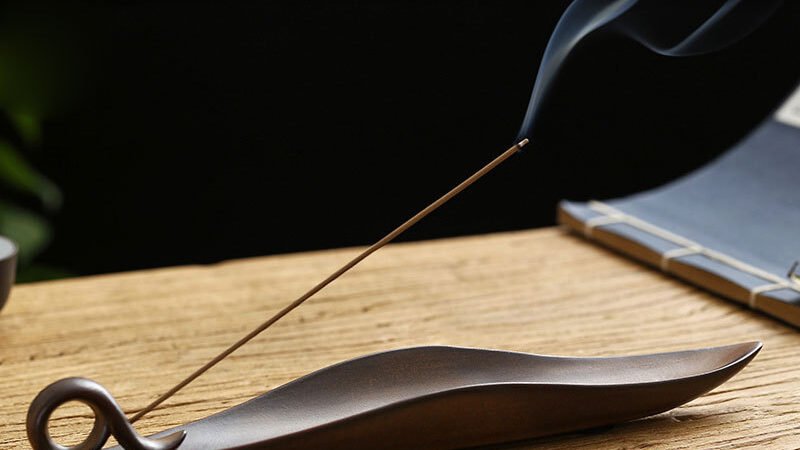
The moment I light a stick of sandalwood before practice, my body knows what’s coming. It’s not magic—it’s conditioning. After months of pairing that scent with yoga, my shoulders drop and my breath deepens before I even step onto the mat. The incense doesn’t create the sanctuary; it announces that I’m entering one.
The Senses Build the Space
Traditional yoga studios understand something that home practitioners often forget: the practice isn’t just physical. Your environment speaks to all your senses, and each sense either supports your practice or distracts from it.
Think about the studios you’ve loved. What made them feel different from a gym or a conference room? Usually, it’s a combination of elements working together—soft lighting, warm temperature, natural materials, and almost always, some kind of scent.
This is where Chinese incense offers something unique.
Beyond “Yoga Scent”
Walk into most Western yoga studios and you’ll encounter one of three smells: lavender, patchouli, or some vaguely “Eastern” synthetic blend that’s supposed to evoke spirituality. These aren’t bad scents, but they’ve become so associated with commercial yoga culture that they can feel performative. Like you’re supposed to feel zen because the room smells like a certain candle.
Chinese incense comes from a different tradition entirely. It wasn’t developed for yoga studios—it was developed for scholars’ studies, meditation halls, tea rooms, and healing spaces. The scents are often subtler, more complex, and less immediately recognizable.
When I burn Chinese sandalwood during practice, it doesn’t smell like “yoga class.” It smells like something older and less categorizable. This might sound like a small thing, but for me, it helped separate my home practice from the sometimes complicated feelings I have about yoga industry culture.
I’m not performing wellness. I’m just practicing, in my own space, with a scent that has no brand associations in my mind.
The Scent Changes as You Move
One thing I didn’t expect: Chinese incense interacts with movement practice differently than I anticipated.
During a dynamic vinyasa flow, the scent becomes stronger as I move around the room, stirring the air. During still poses, it settles into something more subtle. In savasana, lying motionless, I notice notes I completely missed during standing sequences—a hint of sweetness, a woody undertone I hadn’t detected.
This isn’t a feature of the incense; it’s just physics. But it means the scent becomes part of the practice’s rhythm. Dynamic movement brings intensity. Stillness brings subtlety. The incense mirrors what my body is doing, which creates a kind of sensory coherence that’s hard to describe but easy to feel.
Matching Incense to Your Practice Style
Not all yoga is the same, and not all incense works for every practice. After two years of experimenting, here’s what I’ve found:
For Vinyasa and Power Yoga
When I’m doing something dynamic—lots of sun salutations, arm balances, heat-building sequences—I want incense that energizes without overwhelming.
What works: Lighter sandalwood blends, incense with subtle citrus or pine notes, anything described as “clearing” or “refreshing” in traditional Chinese classifications.
What doesn’t work: Heavy, sweet, or strongly floral scents. When you’re breathing hard and sweating, the last thing you want is a cloying smell filling your lungs.
Practical tip: For a 60-minute power practice, I light the incense about 10 minutes before I start. This lets the initial smoke intensity settle, leaving a gentler ambient scent by the time I’m really moving.
For Yin and Restorative Yoga
Slow practices—long holds, lots of props, deep stretching—call for something warmer and more enveloping.
What works: Pure sandalwood, agarwood if you want something special, blends that traditional Chinese sources describe as “calming” or “settling.”
What doesn’t work: Anything too sharp or stimulating. Pine and camphor-forward blends, while lovely for morning practice, can feel jarring during evening yin.
Practical tip: Place the incense closer to your mat for restorative practice. Since you’re not moving much, you won’t naturally circulate the scent through the room. A closer position keeps it present without being overwhelming.
For Prenatal or Gentle Yoga
This is where caution matters most. Pregnancy often brings scent sensitivity, and what smelled pleasant before might become nauseating.
What works: Very mild sandalwood, burned at a distance or in a well-ventilated space. Some practitioners prefer to light incense before practice and extinguish it before beginning, leaving just a trace scent.
What doesn’t work: Strong anything. When in doubt, skip the incense entirely or test your sensitivity with a very short burn before committing to a full practice.
Practical tip: If you’re pregnant or have any respiratory concerns, talk to your healthcare provider before introducing incense to your practice. This isn’t legal caution—it’s genuine care. Your body knows what it needs.
For Meditation-Focused Practice
When the physical asana is just a warmup for seated meditation, the incense serves a different purpose—it’s a bridge between movement and stillness.
What works: Traditional meditation blends, pure sandalwood, anything you’ve already associated with seated practice. Consistency matters here; using the same scent for meditation creates strong mental associations over time.
What doesn’t work: Anything you also use for energetic practice. The goal is to signal “settling” to your nervous system, so you want a scent that’s distinct from your vinyasa smell.
Practical tip: Light a new stick at the transition point between asana and meditation. The act of lighting becomes a ritual that marks the shift, and the fresh scent resets your attention.
Setting Up Your Space: Practical Considerations
Let’s get concrete about how to actually incorporate incense into a home yoga space.
Placement Matters More Than You Think
The first time I burned incense during yoga, I placed the holder right next to my mat. By the time I hit my third downward dog, I was face-to-face with a stream of smoke, eyes watering, trying to find my breath while also trying not to inhale a lungful of ash.
Learn from my mistake.
The ideal placement: 4-6 feet from your mat, elevated if possible (a shelf or windowsill works well), positioned so that your normal practice movements don’t put you directly in the smoke path.
Consider your sequence: If you know you’ll be doing a lot of forward folds on the right side of your mat, don’t put the incense on the right. If your practice ends with legs-up-the-wall on the north end, keep the incense toward the south.
Account for air flow: Incense near a window or vent will disperse quickly. Incense in a still corner will concentrate. Neither is wrong, but know what you’re creating.
Ventilation: The Non-Negotiable
I cannot stress this enough: you need airflow.
Chinese incense produces less smoke than cheap synthetic alternatives, but it still produces smoke. In a small, sealed room, that smoke accumulates. What starts as pleasant can become oppressive by the end of a long practice.
Minimum requirement: One cracked window or door, even just an inch or two.
Ideal setup: Cross-ventilation, where air can enter from one side of the room and exit from another. This creates gentle movement that disperses the incense naturally.
If ventilation is limited: Burn shorter sticks, light the incense before practice and extinguish it partway through, or switch to low-smoke varieties designed for smaller spaces.
The Holder Question
Your incense holder should be:
- Stable — It shouldn’t tip over if you accidentally bump the shelf during a warrior III wobble.
- Heat-safe — It shouldn’t scorch your furniture or carpet.
- Ash-catching — Falling ash should land somewhere contained, not on your mat or floor.
You can spend a lot on beautiful ceramic holders, and eventually I did. But for your first experiments, a simple ceramic dish filled with rice or sand works perfectly. The rice supports the stick and catches the ash. Done.
One thing to avoid: Those flat, wooden incense holders with just a small hole and no ash-catching area. They look minimal and pretty, but ash ends up everywhere, and I’ve seen scorch marks on more than one yoga friend’s furniture.
Fire Safety (Boring but Essential)
Real talk: you’re lighting something on fire in your home and then doing physical poses that occupy your full attention. This requires some basic precautions.
- Never leave burning incense unattended when you leave the room
- Keep incense away from curtains, papers, hanging plants, and anything flammable
- If you have pets or children, ensure they cannot access the burning incense
- Have a plan for extinguishing early if needed (a small dish of sand or water nearby)
- Check that the incense is fully extinguished after practice, not just apparently out
I’ve never had an incident, but I’ve heard stories. A cat knocking over a holder. A curtain brushing against a burning stick. A stick that seemed out but wasn’t. These are preventable problems.
Building the Ritual: Beyond Just Lighting a Stick
The incense itself is just one element of creating a sanctuary feeling. How you incorporate it matters as much as what you burn.
The Transition Ritual
My practice doesn’t begin when I step onto the mat. It begins when I light the incense.
Here’s my sequence:
- I roll out my mat and arrange any props I’ll need
- I select the incense for today’s practice—this takes just a few seconds now, but it’s a moment of intention
- I light the match, hold it to the incense tip, watch the flame catch
- I blow out the flame gently, watching the first curl of smoke rise
- I take three deep breaths, just standing there
- Then I step onto the mat
This takes maybe ninety seconds, but it creates a clear boundary between “regular life” and “practice time.” By the time I’m on the mat, I’ve already begun settling.
Seasonal Rhythms
One unexpected gift of incense practice: I’ve become more attuned to seasons.
In winter, I gravitate toward warmer, woodier scents—sandalwood, agarwood, blends with hints of cinnamon. My practice tends to be slower, more internally focused.
In summer, I want lighter, cleaner scents—or sometimes no incense at all, just an open window and fresh air. My practice gets more dynamic, more playful.
This isn’t a system I planned. It emerged naturally from paying attention to what my body wanted. The incense became a way of marking time, of noticing that January practice is different from July practice, of honoring the fact that we’re not the same person all year round.
The End of Practice
For me, the incense often finishes before my practice does, especially on long-practice days. But if it’s still burning when I reach savasana, I’ve learned to appreciate it differently.
Lying still, eyes closed, the scent becomes the most prominent sensory experience. It’s something to rest my attention on without effort—not a focus object like breath or body scanning, just a gentle presence. A reminder that the world outside my closed eyes is still there, still holding me.
When I finally sit up, if any incense remains, I watch the last of it burn while I transition back to regular life. A small closing ritual to match the opening one.
Common Questions and Concerns
“I’ve tried incense before and hated it—it gave me headaches.”
This is almost always a quality issue. Most Western-market incense uses synthetic fragrances on bamboo or charcoal cores. These can be genuinely irritating.
Traditional Chinese incense is different—the scented wood powder is the main material, not a coating. Try a pure sandalwood stick from a reputable source and see if your experience changes. It often does.
If even quality incense bothers you, that’s okay. Not every practice element works for every body. You might try burning incense before practice and extinguishing it before you begin, leaving just a trace scent.
“Is it cultural appropriation to use Chinese incense for yoga?”
I think about this question seriously because it deserves serious thought.
Here’s my perspective: Chinese incense has been used for millennia in contexts far beyond religion—scholars burning it while studying, doctors using it therapeutically, households using it for atmosphere and air quality. It’s a tool with many applications.
Using it to support a yoga practice isn’t claiming to be Chinese or Buddhist. It’s using a tool for its intended purpose: creating mental clarity and pleasant atmosphere. The key is honesty—I don’t pretend my practice is “authentic Chinese” anything. I’m a Western person using Chinese incense because it works well for what I need.
Buy from sources that respect the tradition. Learn a little about the history. Don’t put on an orientalist performance. Beyond that, I think respectful use is fine.
“Won’t my whole apartment smell like incense?”
It will, mildly, for a few hours after practice. Whether that’s a problem depends on your living situation and preferences.
If you want to minimize lingering scent: increase ventilation during and after practice, choose lighter scents, burn shorter durations, and close the door to the rest of your living space if possible.
If you live with others who dislike incense: consider practicing during times they’re away, or have a conversation about scheduling. In my experience, people who dislike “incense” often dislike cheap synthetic incense; quality Chinese sandalwood is much less polarizing.
“How much does this all cost?”
Less than you might think.
A bundle of quality sandalwood sticks runs $10-25, depending on the source and quality. That bundle might last 2-3 months of regular practice.
A basic holder can be made from a ceramic dish you already own, or purchased for under $15.
Compare that to a single month of yoga studio membership, and the math is pretty favorable.
“What if I rent and can’t burn anything?”
Some leases do prohibit burning candles and incense. If that’s your situation, you have a few options:
- Check if it’s actually enforced — Many landlords include boilerplate restrictions they don’t actually monitor
- Talk to your landlord — Explain what you’re doing and that you’re taking safety precautions
- Use alternatives — Warming plates that heat incense without burning, or simply placing unlit incense near your practice space (the scent is subtle but present)
“Can I use this with online yoga classes?”
Absolutely. The incense doesn’t care whether your instruction is coming from a live teacher or a YouTube video.
In fact, I’d argue incense becomes more valuable for virtual practice. It adds a sensory dimension that the screen can’t provide, making the experience feel less like “watching a video in your living room” and more like an actual practice.
Starting Simple
If this all sounds appealing but also slightly overwhelming, here’s the minimal version:
Get: One bundle of pure sandalwood sticks. One ceramic dish.
Do: Light one stick 5-10 minutes before your next home practice. Place it somewhere safe, away from your mat. Practice as usual. Notice what you notice.
That’s it. No complicated setups, no variety of scents to choose between, no rituals you have to follow. Just one stick, one practice, see what happens.
The sanctuary builds itself over time. Each practice adds another layer of association, another memory, another moment where that scent meant something to you. After a few months, you won’t need to consciously create the sacred feeling—it will arise the moment the smoke does.
The Space That’s Waiting
My yoga corner still isn’t impressive by any objective measure. Same bookshelf partially blocking the view. Same apartment sounds leaking through the walls. Same 6×8 feet of floor space that has to serve multiple purposes.
But when I light the incense, none of that matters. The space transforms—not physically, but in some more important way. My body knows this is where practice happens. My breath knows to deepen. My mind knows to begin letting go.
That’s what sanctuary means, I think. Not a perfect room in a perfect house. Just a space your nervous system trusts. A place where your body remembers how to settle.
Chinese incense didn’t create my sanctuary. But it showed me where the door was.
What does your home practice space look like? I’d love to hear about your setups—especially the creative solutions for small spaces. Share in the comments below.