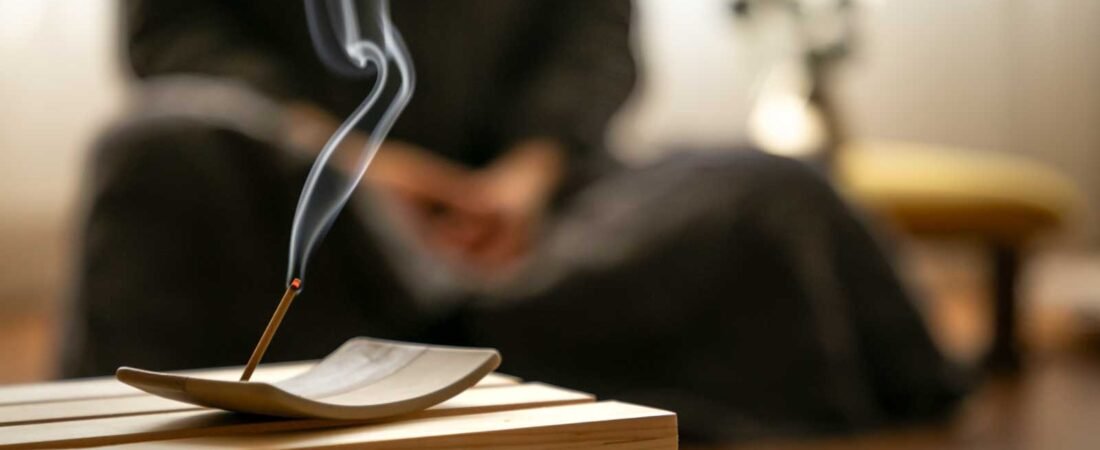
Standing in a Seattle tea shop last winter, a familiar scent stopped me mid-sentence. It wasn’t the tea. The owner was burning real Chinese incense in the back room, and suddenly I was transported to my first morning in a Beijing hutong—that distinctive mix of aged wood, morning mist, and something indefinably ancient. “That’s what Chinese incense actually smells like,” I told my confused friend, who’d only known the synthetic stuff. But how do you describe a smell that’s more like a conversation than a shout?
Trying to explain Chinese incense to someone who’s never experienced it is like describing the color blue to someone who’s only seen navy and electric blue. Yes, they’re all blue, but the subtlety, the range, the quiet complexity—that’s what you’ve been missing.
First, Let’s Clear Your Nose (What It’s NOT)
Before we dive into what Chinese incense does smell like, we need to deprogram your nose from what it doesn’t smell like. If your incense experience comes from head shops, mall kiosks, or that “Oriental Gifts” store next to the food court, I need you to forget everything you think you know.
That aggressive “Dragon’s Blood” incense that knocked you over in college? Not even remotely Chinese. The “Zen Garden” sticks that smell like someone weaponized a flower shop? Nope. The “Eastern Mystic” cones that made your roommate’s eyes water? About as Chinese as fortune cookies.
Here’s the thing: most “Chinese incense” sold in Western stores is actually synthetic incense made to smell like what Western marketers think Eastern incense should smell like. It’s the olfactory equivalent of Panda Express—inspired by the idea of Chinese, but missing the actual point entirely.
Indian incense, which dominates most Western incense shops, operates on a different philosophy. Where Chinese incense whispers, Indian incense sings opera. Both beautiful in their way, but if you’re expecting Bollywood and get a Buddhist temple, you’ll be confused. Indian incense often features strong florals, intense sweetness, and immediate impact. Chinese incense unfolds slowly, values subtlety, emphasizes wood over flowers.
Japanese incense sits closer to Chinese on the subtlety spectrum, but there’s still a distinction. Japanese incense often aims for singular clarity—this is pine, this is cherry blossom. Chinese incense loves complexity, layers, conversations between ingredients. It’s the difference between a solo violin and a string quartet.
The Base Notes: The Foundation Scents
Sandalwood – The Warm Embrace
If Chinese incense had a greatest hit, it would be sandalwood. But not the sandalwood you might know from soap or candles. Real sandalwood in Chinese incense smells like cedar’s calmer, more sophisticated cousin who went to therapy and learned to be comfortable with silence.
The best comparison I can give? Walk into a high-end furniture store—not IKEA, think restoration hardware or an antique shop specializing in Asian pieces. That warm, woody, somehow creamy smell that makes you want to run your hands over everything? That’s closer to real sandalwood than any perfume or air freshener.
It’s soft where cedar is sharp. It’s warm where pine is cool. If you’ve ever sharpened a really expensive pencil—the kind artists use—that woody, smooth, almost buttery smell is in the ballpark. But sandalwood adds something else: a subtle sweetness that isn’t sugary, more like the sweetness of fresh-cut lumber or wheat fields.
Morning sandalwood (freshly lit) smells different than aged sandalwood (been burning for 10 minutes). The morning version has a slight sharpness, almost metallic—that’s the natural oils heating up. Give it five minutes and it mellows into something that smells like comfort itself. It smells like expensive furniture stores, but friendlier. Like libraries, but warmer. Like saunas, but drier.
Agarwood – The Mysterious Expensive One
Agarwood is where things get interesting—and expensive. My $50 lesson in why agarwood costs so much came when I bought my first real oud-based incense. One stick. Fifty dollars. I lit it expecting heavenly choir levels of amazing. Instead, I got… barnyard?
Here’s what nobody tells you about agarwood: it’s weird. Beautifully weird, but weird. Imagine honey meets leather meets ancient books meets that funky cheese you’re not sure about at first but then can’t stop eating. There’s a note in good agarwood that smells almost animal—musky, alive, slightly fermented. It’s sweet decay that’s somehow beautiful, like autumn leaves that have been on the ground just long enough to start returning to earth.
The Western nose often needs time to appreciate agarwood. First burn: “This is odd.” Second burn: “It’s growing on me.” Third burn: “Is this what love feels like?” By the tenth burn, you’re calculating if you can afford to maintain this relationship.
What makes agarwood special is its complexity. In the first minute, you might smell: dark chocolate (but not sweet), wet wood (but not moldy), leather jacket (but not chemical), honey (but not sugary), and something indescribably ancient—like opening a chest that’s been closed for centuries.
Star Anise & Spices – The Familiar Surprises
This is where Western noses suddenly feel at home. Chinese incense often incorporates spices we recognize from cooking, but deployed differently. Star anise in incense doesn’t smell like licorice candy—it smells like Christmas cookies without the sugar, like mulled wine without the wine, like that moment when you open the spice cabinet and all the smells mingle.
Clove appears frequently, but not the ham-studding, dental office clove intensity. In incense, clove becomes warm background music—present but not dominant. It adds depth without taking over, like bass in a good song.
Cinnamon in Chinese incense isn’t the cinnamon roll sweetness Americans expect. It’s bark-forward, woody, almost sharp. Think cinnamon stick in hot apple cider versus cinnamon sugar on toast. It’s the smell that makes Western noses think “holiday” and Chinese noses think “home.”
The genius is in the combination. Chinese five-spice in incense form doesn’t smell like cooking—it smells like memory. Warm but not hot, sweet but not cloying, familiar but somehow formal.
The Journey of Scent: Beginning, Middle, End
The First 30 Seconds – The Introduction
Light a stick of Chinese incense and the first thing you smell might disappoint you. Sometimes it’s sharp—that’s often the bamboo core charring. Sometimes there’s an alcohol note—that’s natural resins releasing their volatile compounds. Sometimes it smells like… nothing much?
Like meeting someone shy—give it time.
The first thirty seconds are the incense waking up. Natural materials don’t explode into scent like synthetic fragrances. They need heat to release their oils, time to combine in the air, space to develop. That initial sharpness? It’ll pass. That alcohol note? Gone in seconds. That nothing much? Wait for it…
The Heart Notes – Where Magic Lives (5-20 minutes)
Minute seven is when guests always say “oh, NOW I smell it.”
This is when individual ingredients become a symphony. The sandalwood base has warmed up and spread out. The spices have started their dance. Any floral notes peek through like sun through clouds. This is the incense’s real personality—not the awkward introduction, not the lingering goodbye, but the warm conversation in between.
Sweetness emerges from nowhere—not added sugar but the natural sweetness of heated resins and woods. Woody notes deepen, becoming less “lumber yard” and more “ancient forest.” If there’s agarwood, this is when it stops being weird and starts being profound.
You might catch unexpected notes: a hint of vanilla (from certain sandalwoods), a whisper of rose (from some resins), a moment of mint (from camphor woods). These aren’t added fragrances—they’re the complex chemistry of natural materials interacting with heat and air.
The Lingering Ghost – After the Burn
Here’s something nobody mentions: Chinese incense keeps changing even after it’s done burning. The scent that lingers in the room isn’t the same as what you smelled while it burned. It’s softer, rounder, like the edges have been sanded smooth.
Your clothing absorbs it differently than the room does. My jacket always smells sweeter than my office after burning the same incense—something about fabric holds the lighter notes while rooms keep the base notes. My car still smells like last week’s meditation session, but it’s transformed into something almost edible, like cookies made of wood and spice.
The next-day surprise is real. Walk into a room where you burned incense yesterday and you’ll catch a ghost of it—not the full experience but a memory in scent form. It’s mixed with your life now: coffee, morning air, whatever you cooked for dinner. This integration is part of the charm.
Regional Variations and Styles
Northern Style – Beijing and Beyond
Northern Chinese incense reflects its environment: drier, more austere, intellectual. It’s heavy on pine and cypress, woods that grow in harder climates. There’s less sweetness, more clarity. It smells like serious thinking.
This is the “scholarly incense” tradition—what you’d burn while practicing calligraphy or reading classical texts. The scent profile is like libraries meet winter mornings. Clean, focusing, slightly sharp. There’s often a note that reminds me of ink—not the chemical smell of modern pens but the mineral, slightly metallic smell of traditional ink sticks.
When I burn northern-style incense, my brain automatically shifts into work mode. It’s the olfactory equivalent of putting on glasses—suddenly everything seems clearer, more defined.
Southern Style – Guangzhou Sweetness
Travel south and the incense gets friendlier. Southern Chinese incense embraces sweetness—not candy sweetness but fruit-and-flower sweetness. There’s more complexity, more layers, influenced by the merchant tradition of Southern ports where ingredients from across Asia mingled.
Borneo camphor shows up here, adding an almost mentholated brightness. Osmanthus (sweet olive) appears, bringing apricot-like notes. The sandalwood might be supplemented with other tropical woods that add their own sweetness.
It’s like dried fruits met flowers in a spice market and decided to get married. There’s a generosity to Southern incense—where Northern style makes you lean in to catch subtle notes, Southern style comes to meet you. Not aggressive, just welcoming.
Tibetan Influenced – The Medicinal Edge
Tibetan-influenced Chinese incense is the challenging child of the family. It’s herbaceous, medicinal, sometimes difficult for Western noses. Heavy on juniper, medicinal herbs, sometimes yak dung (yes, really, and it doesn’t smell like you’d think).
This incense smells like wellness before wellness was trendy. There’s often a bitter note—from healing herbs—that reads as “healthy” rather than “pleasant” at first. Juniper brings a gin-like sharpness. Various medicinal roots add earthiness that can be challenging.
But here’s the thing: burn it when you have a cold and suddenly it makes perfect sense. The camphor opens your sinuses, the herbs feel healing, the earthiness grounds you. It’s functional incense—not for ambiance but for effect.
The Emotional Translations
What “Contemplative” Smells Like
When incense makers create “contemplative” blends, they’re aiming for a specific mental state through scent. It usually means sandalwood and white tea, maybe a touch of frankincense. Dry, clean, focused. It’s the absence of sweetness that matters—nothing to distract or delight, just support.
It smells like paper and rain. Like 4 AM writing sessions when the world is quiet. Like the moment before you begin something important. There’s a coolness to contemplative incense, even though it’s literally burning. It creates space rather than filling it.
What “Ceremonial” Smells Like
Ceremonial incense means business. Heavy agarwood, serious frankincense, sometimes myrrh. Dense, significant, formal. It commands attention without demanding it—like a judge entering a courtroom, everyone naturally quiets down.
This is incense that smells expensive because it is expensive. It smells old even when newly made. Resinous and ancient, like entering a space that matters. The first time I burned ceremonial-grade incense, I instinctively straightened my posture. It has that effect.
What “Daily Practice” Smells Like
Daily practice incense is the comfortable shoes of the incense world. Simple sandalwood or cedar, maybe a touch of spice, nothing fancy. It’s familiar, comforting, unfussy. The olfactory equivalent of a daily uniform—not exciting but absolutely essential.
It smells like your favorite coffee mug—nothing special but absolutely essential. Like the route you walk every morning—so familiar you could do it with your eyes closed. This is incense that becomes part of your life’s background music, supporting without intruding.
Common Scents Decoded: A Translation Guide
“Temple Incense” Usually Means:
When you see “temple incense,” expect heavy sandalwood base with mild floral middle notes. Often there’s jasmine or lotus, sometimes a touch of camphor for brightness. It smells like old wood meets fresh flowers—formal but not forbidding.
The temple designation usually means it’s designed for larger spaces, so it might seem strong in a small room. There’s often a slight medicinal note—temples traditionally burned incense for purification as well as ceremony.
“Meditation Incense” Typically Contains:
Calming woods (sandalwood, aloeswood), minimal sweetness, sometimes mint or cooling herbs. Never aggressive or distracting. Imagine if calm had a smell—that’s what they’re going for.
The best meditation incense is barely there until you pay attention. It supports awareness without demanding it. Like a good meditation cushion, you forget about it until you need it, then you’re grateful it’s there.
“Healing Incense” Often Features:
Medicinal herbs dominate here: angelica, clove, white cardamom. Often camphor or eucalyptus notes for opening airways. Sometimes bitter undertones from healing roots. It’s clearing rather than sweet, functional rather than merely pleasant.
It smells like a very expensive health food store—that mix of herbs, supplements, and good intentions. Not always pleasant on first encounter, but grows on you as you associate it with feeling better.
How to Train Your Nose
Your nose is smarter than you think, it just needs vocabulary. Start with single-ingredient incense to learn the basics. Pure sandalwood teaches you that base note. Pure agarwood (if you can afford it) shows you complexity. Pure frankincense introduces you to resins.
The coffee bean reset trick works: smell coffee beans between different incenses to clear your palate. Morning nose is different from evening nose—most people smell more acutely in the morning, but some find evening burning more enjoyable when the nose is slightly fatigued.
Build your scent vocabulary by making connections. My notebook of silly but accurate scent descriptions includes gems like: “Sanskrit homework” (heavy sandalwood and ink), “Grandmother’s jewelry box if grandmother was a tree” (agarwood and old wood), “Christmas morning but nobody cooked yet” (spice-heavy blend).
Comparison exercises help. Burn Indian incense one day, Chinese the next. Notice the difference. Burn synthetic then natural. The contrast teaches you. Burn the same incense in different rooms—bathroom acoustics work for sound and scent.
Your Nose Knows More Than You Think
After years of burning Chinese incense, I still discover new notes. Last week, I caught a hint of dried apricot in an agarwood blend I’ve used for months. That’s the beauty of natural Chinese incense—it reveals itself slowly, like a friendship developing over tea.
Your nose already knows these scents from other contexts: the lumber aisle at Home Depot, the spice cabinet in your kitchen, that antique shop downtown, your grandmother’s jewelry box, the forest after rain. Chinese incense just combines them in ways that tell different stories.
Don’t worry if you can’t smell everything others describe. Scent is deeply personal—what smells like honey to me might smell like leather to you. We’re both right. The important thing is paying attention, making connections, building your own library of scent memories.
Start simple. Get one good sandalwood incense. Burn it daily for a week. Notice how your perception changes. Notice what time of day you enjoy it most. Notice how it interacts with your coffee, your cooking, your mood. By week’s end, you’ll know what Chinese incense smells like—not from my description, but from your experience.
Scent Family Reference Chart
Woody Family:
- Sandalwood: creamy, soft, warm
- Agarwood: complex, honey-leather, ancient
- Cedar: sharp, clean, dry
- Pine: fresh, resinous, cool
- Cypress: green, slightly mint, austere
Spicy Family:
- Cinnamon bark: woody, warm, less sweet
- Clove: deep, slightly numbing, warm
- Star anise: licorice-like but drier
- Black pepper: sharp, warm, awakening
- Cardamom: sweet, cool, complex
Floral Family:
- Jasmine: sweet, intoxicating, night-blooming
- Rose: soft, powdery, classic
- Osmanthus: apricot-like, fruity-floral
- Lotus: light, aquatic, clean
- Chrysanthemum: herbal-floral, slightly bitter
Herbal Family:
- Mugwort: sage-like, clearing
- Patchouli: earthy, grounding
- Mint: cooling, clearing
- Tea: tannic, clean, astringent
Resinous Family:
- Frankincense: lemony, church-like, bright
- Myrrh: bitter, medicinal, ancient
- Benzoin: vanilla-like, sweet, balsamic
- Pine resin: fresh, forest, sticky-sweet
Familiar Scent Comparisons
- Sandalwood = expensive furniture store + vanilla – the sweetness
- Agarwood = leather jacket + honey + that used bookstore smell
- Star anise = black licorice + Christmas cookies – the sugar
- Frankincense = Catholic church + lemon peel + morning fog
- White tea incense = fresh laundry dried outside + cut grass
- Traditional temple blend = library + flower shop + that one antique store
- Meditation blend = rain on wood + distant flowers
- Northern style = pencil shavings + winter air + old books
- Southern style = dried fruit basket + flower market + spice shop
The Beginner’s Smell Journey
Week 1: Pure sandalwood – learn the base. Notice how it changes from lighting to extinction.
Week 2: Sandalwood blend – can you identify what’s been added? Write down your guesses.
Week 3: Different wood base – try cedar or pine. Compare to your sandalwood memory.
Week 4: Complex blend – how many individual notes can you identify? Don’t worry about being right.
What Your Nose Might Be Telling You
- “Too sweet” = probably synthetic additions or artificial vanilla
- “Chemical undertone” = artificial fragrances, avoid this brand
- “Reminds me of cologne” = added perfume oils, not traditional
- “Smells like barbecue” = over-charred or poor quality bamboo core
- “Can’t smell anything” = nose fatigue, take a break, try again tomorrow
- “Makes me sneeze” = possible allergy or sensitivity to specific ingredient
- “Gives me a headache” = likely synthetic, switch brands
- “Smells different each time” = natural incense responding to humidity/temperature
FAQ
Q: Why does Chinese incense smell different from Indian incense? A: Different philosophy and ingredients. Indian incense often uses flower oils and sweet resins for immediate impact. Chinese incense emphasizes woods and subtle herbs that unfold slowly. It’s like comparing espresso to pour-over coffee—both coffee, totally different experience.
Q: Is the smell supposed to be subtle? A: Generally yes. Chinese incense whispers where others shout. If you’re used to aggressive fragrances, your nose needs adjustment time. After a week of natural incense, you’ll start catching notes you missed entirely at first.
Q: Why does it smell different at different times? A: Everything affects scent: humidity, temperature, what you’ve eaten, your mood, time of day, even your hormones. The same incense can smell woody in the morning and sweet at night. That’s the beauty of natural materials—they’re alive and responsive.
Q: What if I can’t smell anything? A: Three possibilities: nose fatigue (take a break), poor quality incense (try a different brand), or wrong expectations (expecting patchouli, getting subtle sandalwood). Reset with unscented time, then try again with openness.
Q: Does expensive incense smell better? A: Usually, yes. Quality ingredients cost more. $30 agarwood incense uses real agarwood; $3 “agarwood” uses synthetic approximations. But expensive doesn’t always mean better for you—sometimes simple sandalwood is perfect.
Q: Why does the same incense smell different to different people? A: Genetics, memories, associations, even cultural background affects scent perception. What smells like honey to me might smell medicinal to you. Neither is wrong—scent is deeply personal.
Q: Can Chinese incense smell bad? A: To some noses, yes. Agarwood can smell barnyardy. Medicinal incense can smell bitter. Some resins smell like band-aids to certain people. Usually, repeated exposure shifts perception from “weird” to “interesting” to “pleasant.”
Q: How long does the scent last in a room? A: Depends on ventilation, humidity, and materials in the room. Fabric holds scent longer than hard surfaces. Typically: strong presence for 30 minutes, noticeable for 2 hours, trace notes until next day. Good incense leaves a gentle memory, not an aggressive presence.
What familiar smell does Chinese incense remind you of? My mother says “antique shops,” my partner says “expensive tea,” my neighbor says “really old libraries.” Drop your translation in the comments—I love hearing how different noses interpret the same scents. And if you’ve had that moment where Chinese incense suddenly “clicked” for you, share that story. Those awakening moments are my favorite to read.