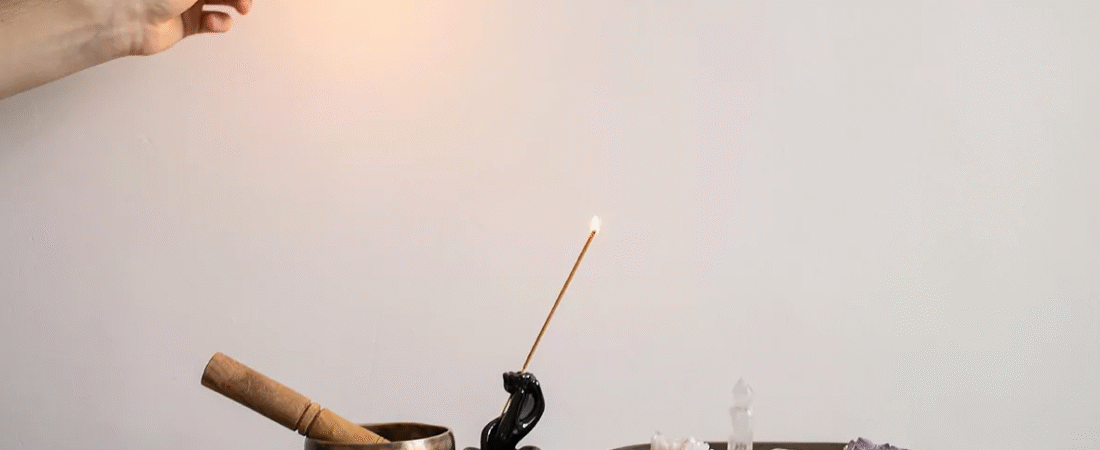
“Is someone Buddhist here?” my neighbor asked, smelling incense from my apartment. When I explained I burn incense while working from home—no altar, no prayers, just spreadsheets and sandalwood—she looked genuinely confused. That conversation made me realize how much the West misunderstands why Chinese people use incense. Yes, temples burn it, but so do CEOs, students cramming for exams, and grandmothers cooking dinner. After three years of studying this tradition and accidentally becoming my friend group’s “incense explainer,” let me share why 1.4 billion people aren’t all secretly monks.
The truth is both simpler and more complex than Western assumptions. It’s simpler because often there’s no spiritual component at all—just practical, psychological, or aesthetic reasons. It’s more complex because these reasons layer like sedimentary rock, each generation adding meaning while keeping the old ones, creating a practice so woven into daily life that many Chinese people can’t explain why they do it—they just do.
First, Let’s Bust the Temple Myth
Here’s what might blow your mind: most Chinese people who burn incense aren’t particularly religious. My atheist Chinese mother-in-law burns incense every morning while reading the news on her iPad. My Chinese colleague, who describes himself as “aggressively agnostic,” keeps a stick burning during important video calls. The Chinese students in my building burn incense during finals week, and I’m pretty sure their only religion is getting into graduate school.
The Western mind often creates a false divide: secular vs. sacred, practical vs. spiritual, modern vs. traditional. Chinese culture doesn’t draw these lines so sharply. Incense can be simultaneously mundane and meaningful, practical and ceremonial, Tuesday morning and special occasion.
In modern China, incense appears in places that would surprise you. Tech startups in Shenzhen have incense in their break rooms. Shanghai financial firms burn it in certain meeting rooms. Beijing libraries have designated areas where students can light a stick before studying. This isn’t about prayer—it’s about practice.
Why does your Chinese coworker burn incense at their desk? Probably for the same reason you have a specific coffee mug or arrange your desk a certain way—it creates a mental environment that says “time to work.” The fact that their grandfather did something similar with different intentions doesn’t make their practice religious; it makes it continuous.
The confusion often comes from visible temple practices. Yes, temples burn massive amounts of incense. But assuming all incense use is religious is like assuming everyone who lights candles is holding a séance. Context matters, intention matters, and sometimes, a stick of sandalwood is just a nice smell that helps you focus on spreadsheets.
The Historical Why: Origins That Still Matter
Medicine Before Prayer
Before incense was spiritual, it was medical. Ancient Chinese medicine used smoke fumigation to prevent disease, clear “bad air,” and protect spaces. This wasn’t mysticism—it was the best available public health practice. Many incense ingredients have antimicrobial properties. Our ancestors didn’t know about bacteria, but they knew certain smokes kept sickness away.
The 2003 SARS outbreak created an unexpected incense revival nobody talks about. Suddenly, traditional fumigation practices didn’t seem so outdated. My colleague in Hong Kong remembers her modern, Western-educated parents suddenly burning medicinal incense throughout their apartment. “We joked about it being superstition,” she told me, “but we also noticed we felt safer. Placebo or not, it helped.”
During the early COVID-19 pandemic, incense sales in China spiked—not for prayer but for the same reason people stockpiled hand sanitizer. The traditional practice of “clearing the air” suddenly felt relevant again. Whether it actually helped matters less than the feeling of doing something protective, something proven by centuries of survival.
The Practical Aristocrat
Ancient Chinese aristocrats and scholars used incense for surprisingly mundane reasons. Before clocks, incense timekeeping was sophisticated—specific formulas burned at predictable rates. Students timed their study sessions, officials timed meetings, and merchants timed negotiations. “One stick of incense time” is still used in Chinese to mean “about 30 minutes.”
Mosquito repellent for scholars wasn’t about comfort—it was about survival. Malaria and other mosquito-borne diseases killed more scholars than all the palace intrigue in Chinese history. Certain incense ingredients naturally repel insects. Burning incense while studying wasn’t ritual; it was practical protection.
How incense literally saved ancient books: humidity destroys paper, and southern China is humid. Incense smoke helps control moisture and prevents mold. Temple libraries that survived centuries didn’t make it because of divine protection—they made it because monks understood preservation chemistry through experience. The books that smell like incense aren’t scented for pleasure; they’re protected by practice.
Food preservation through smoking was another practical use. Certain incense woods added flavor while preventing spoilage. What we now consider aromatic ambiance was once food safety technology.
The Cultural DNA: Why It Stuck Around
The Concept of Kong Jian (空间) – Space Making
Chinese philosophy recognizes that space isn’t just physical—it’s psychological. Kong jian literally means “empty space,” but it really means creating mental room. Incense creates invisible boundaries more effectively than walls. Light incense, and suddenly this corner of your 300-square-foot apartment is an office. Extinguish it, and you’re home again.
This is why Chinese offices often smell like sandalwood. It’s not about relaxation or spirituality—it’s about definition. The scent says “this is work space” as clearly as a sign on the door. In open offices, individual incense creates personal territory without physical barriers.
The invisible door between work and life matters more in Chinese urban living where spaces overlap. Your dining table is also your desk, your bedroom is also your study, your kitchen is also your meeting room. Incense helps your brain recognize which room you’re in, even when you haven’t moved.
Wen Ren (文人) – The Scholar Tradition
The scholar tradition influences modern Chinese life more than people realize. Ancient scholars considered incense one of the four arts (along with tea, flower arranging, and painting). This wasn’t pretension—it was cognitive enhancement. Specific scents were believed to improve memory, focus, and creativity.
Modern students inherit this belief, consciously or not. Walk through any Chinese university during exam season and you’ll smell incense from dorm windows. These aren’t religious students praying for success—they’re engineering students who swear sandalwood helps them remember formulas.
My Chinese tutor’s “thinking stick” ritual exemplifies this. Before tackling difficult translations, she lights one specific stick—always the same brand, always the same time. “It tells my brain we’re doing hard work now,” she explains. “Like putting on special clothes, but for your mind.”
Why libraries in China sometimes allow incense seems contradictory—smoke and books don’t mix. But designated incense areas recognize the cultural connection between scent and scholarship. It’s accommodation of deep cultural practice, like having tea in British libraries.
The Social Lubricant
Chinese social interaction involves layers of indirect communication, and incense participates in this dance. Light incense for a guest, and you’re saying “you matter” without words. The quality of incense communicates respect level. The timing communicates urgency or leisure.
The client meeting where incense closed the deal sounds like magical thinking, but it was strategic atmosphere creation. My friend in Beijing real estate lights specific incense for property showings—not for luck but for psychological effect. “Sandalwood makes spaces feel more expensive,” she says. “Agarwood makes clients feel respected. It’s staging, but for noses.”
Status without stating is crucial in cultures that value humility. You can’t say “I’m successful,” but you can burn $50-per-stick agarwood. Visitors understand without discussion. It’s like wearing an expensive watch but for your living room.
The Modern Professional Why
The WFH Revolution in China
The Shanghai lockdown changed incense culture in ways still unfolding. Millions of Chinese professionals suddenly worked from 500-square-foot apartments with family members in every corner. Incense became the cubicle wall that didn’t exist.
Boundary setting in small spaces isn’t luxury—it’s sanity. Light incense at 9 AM, and your family knows you’re “at work” even though you’re three feet from the kitchen. The scent creates psychological distance that physical distance can’t provide.
The Zoom call background atmosphere matters more than Westerners might think. Chinese business culture values environmental harmony. That subtle smoke rising behind you during video calls doesn’t just look professional—it communicates that you take this seriously enough to create proper space, even at home.
The productivity trigger effect is real, whether or not you believe in traditional theory. It’s classical conditioning—burn the same incense every time you work, and eventually, that scent triggers work mode. It’s Pavlov’s dog, but with sandalwood instead of bells.
The 996 Burnout Response
“996” (working 9 AM to 9 PM, 6 days a week) created a burnout epidemic in Chinese tech companies. Traditional solutions met modern problems. Incense became the anti-digital ritual, the five-minute rebellion against screens.
Why Alibaba employees bulk-buy sandalwood isn’t about spirituality—it’s about survival. The 15-minute incense break forces you to stop, light something, watch smoke, breathe. It’s mindfulness for people who think mindfulness apps are ridiculous. It’s meditation for people who won’t meditate.
Tech workers discovered what scholars knew centuries ago: certain tasks pair well with certain scents. Debugging code? Pine incense for clarity. Design work? Floral blends for creativity. Email mountain? Sandalwood for patience. It sounds like nonsense until you try it and suddenly your focus improves, placebo or not.
The cigarette break replacement aspect matters too. Smoking rates dropped among young Chinese professionals, but the need for ritualized breaks didn’t. Incense provides the ritual—step outside, light something, watch it burn, return refreshed—without the lung damage.
The Study Culture Connection
Gaokao (China’s college entrance exam) preparation drives an entire incense subcategory. “Study incense” flies off shelves every spring. Parents buy it, students burn it, and whether it helps academically matters less than the feeling of doing everything possible.
The incense that got me through my dissertation wasn’t even Chinese—I adopted the practice from my Chinese study group. We’d light a stick at the beginning of each session, and it would burn out just as we needed a break. Simple, effective, no phone timer required.
Graduate student survival tools in China include specific incense routines. The pre-thesis defense stick. The post-rejection ritual. The celebration blend for accepted papers. These aren’t prayers—they’re punctuation marks in academic life.
Coding bootcamps in China have developed their own incense culture. Instructors burn it during particularly difficult modules. Students associate certain scents with breakthrough moments. It’s programming paired with perfume, and surprisingly effective for memory formation.
The Family and Home Reasons
Generational Bridge
Chinese families separated by geography, politics, or time use incense as connection. The grandmother in Guangzhou burns incense every morning. Her granddaughter in Toronto burns the same brand at night. They’re twelve hours and 12,000 kilometers apart, but for a moment, they share the same air.
What grandparents taught without words gets transmitted through practice. You watched grandmother light incense before cooking, so you light incense before cooking. You don’t know why, she never explained, but the continuity matters more than the reason.
Modern adaptations keep the practice while changing the meaning. Young Chinese professionals burn incense their grandparents used for ancestors, but they’re using it for ambiance. The action remains, the intention evolves, the connection persists.
How incense connects me to a home I’ve never seen—this is the diaspora story. Second-generation Chinese Americans buy incense because it smells like grandmother’s house, which smelled like her grandmother’s house, which smelled like a village they’ll never visit. It’s heritage in smoke form.
The Seasonal Household Management
My Chinese neighbor’s weather-based incense calendar seemed quirky until she explained the logic. Rainy season? Antimold incense heavy on camphor. Hot summer? Mosquito-repelling citronella blends. Dry winter? Moisturizing sandalwood. Spring cleaning? Purifying pine.
This isn’t about spiritual energy—it’s about practical household management passed down through generations. Before modern climate control, incense helped manage indoor environments. The practice continues even with air conditioning because it works, or at least feels like it works.
The summer mosquito situation is real. Certain incense ingredients repel insects better than some commercial products. My Chinese friends laugh at my chemical bug spray while lighting their traditional coils. Their method smells better, costs less, and connects them to centuries of summer evenings.
Winter warming atmosphere isn’t about temperature—it’s about perception. Warm-scented incense (cinnamon, clove, thick sandalwood) makes rooms feel warmer. It’s psychological climate control, and in expensive urban heating, every degree of perceived warmth matters.
Special Occasions Without Religion
The completely secular wedding incense moment surprised me. The couple was atheist, modern, marrying in a hotel. But they lit three sticks of incense before the ceremony—not to ancestors or gods, but to “mark the moment as special.” It was punctuation, not prayer.
New home blessing in secular form means lighting incense in each room, not for spirits but for transition. It marks the space as yours, clears previous tenants’ energy (psychological, not spiritual), and creates your first memory in each room.
Baby’s first month celebration often includes incense even in non-religious families. It’s about announcement—this space now contains new life. The grandparents expect it, the parents accommodate it, and nobody mentions gods.
Business opening customs persist even in modern startups. That tech company launch party with incense? It’s not about fortune—it’s about seriousness. We’re not playing around; we’re burning expensive things to show commitment.
The Psychological Why: What Science Says
The Neuroscience Connection
When my therapist suggested incense for anxiety, I thought she’d gone alternative medicine on me. But she pulled up studies on scent and nervous system regulation. Certain compounds in sandalwood actually interact with olfactory receptors that connect to emotional regulation centers in the brain.
Memory formation and scent are neurologically linked stronger than any other sense. This is why incense becomes such a powerful tool for Chinese students—burn the same scent while studying and during the test, and retrieval improves. It’s not magic; it’s neuroscience.
The stress reduction mechanism isn’t just about nice smells. The ritual of lighting incense forces a pause, requires focus on something physical, and creates a predictable sensory experience. It’s everything anxiety hates: slow, deliberate, controlled.
The placebo that works anyway deserves respect. If believing incense helps you focus makes you focus better, does it matter if it’s “real”? Chinese culture is pragmatic about these things—if it works, use it. Don’t overthink the mechanism.
Cultural Psychology Factors
Collective ritual in individualist times matters more than we admit. When millions of Chinese people light morning incense, they’re participating in something shared even when alone. It’s communion without church, tradition without dogma.
The control paradox in chaos is real—we can’t control much, but we can control this small fire, this specific scent, this brief moment. For Chinese urban dwellers navigating unprecedented change, incense provides continuity in discontinuity.
Why it works even if you don’t believe: habit stacking, sensory anchoring, ritual behavior—all proven psychological tools that function regardless of belief. The Chinese student who says “I don’t believe in it but I do it anyway” understands something about human psychology that transcends culture.
The Aesthetic and Artistic Why
The Living Art Form
Young Chinese collectors driving prices up aren’t buying incense to burn—they’re buying it to own, age, trade. Vintage incense from famous makers appreciates like wine. It’s investment and aesthetics combined.
Incense as temporal sculpture makes sense when you think about it. The smoke patterns are unique, unrepeatable, beautiful. It’s art that exists then vanishes, very Buddhist even when the appreciator isn’t.
The Instagram factor (yes, really) brought young Chinese back to incense. Those aesthetic flat-lay photos of incense tools, the slow-motion smoke videos, the ASMR incense lighting content—it’s traditional practice meets modern platform.
The appreciation culture goes beyond burning. Incense packaging, tool collecting, vintage burner hunting—it’s become like vinyl records for a certain Chinese demographic. Analog, authentic, aesthetic.
The Tea and Incense Pairing
The flavor you smell but don’t taste enhances tea without changing it. Chinese tea culture always included incense because the combination creates synesthesia—taste affecting smell affecting taste. It’s why high-end Chinese tea shops burn specific incense.
Why bubble tea shops burn incense isn’t traditional—it’s smart business. The right scent makes drinks taste better, shops feel fancier, experiences more memorable. It’s marketing through nose.
Modern café culture in China adopted incense like America adopted wifi—it’s expected now. The coffee shop without incense feels incomplete, like something’s missing even if you can’t identify what.
Understanding vs. Appropriating
After all these reasons, here’s the truth: Chinese people use incense for as many reasons as Westerners use candles. Sometimes it’s special, sometimes it’s Tuesday. Sometimes it’s profound, sometimes it’s just nice. The difference isn’t in the burning—it’s in the centuries of layered meaning that even secular, modern Chinese people carry whether they think about it or not.
You don’t need to adopt these meanings to use incense. But understanding them explains why your Chinese colleague gifts you incense for your promotion (marking achievement), why the Chinese grocery store sells it next to the tea (natural pairing), and why “burning incense” in Chinese can mean everything from praying to procrastinating to processing to persevering.
The practice survives because it adapts. Temple incense became desk incense. Timekeeping incense became productivity incense. Medicinal incense became wellness incense. The thread continues even as the fabric changes.
For non-Chinese people curious about the practice, here’s permission: you can use incense without converting to anything, without appropriating anything, without believing anything. Light it because you like it, because it helps you focus, because it makes your apartment smell less like takeout. Your reasons are valid too.
What matters isn’t why Chinese culture developed these practices but why they continue. In a world of notifications, screens, and constant connectivity, the simple act of lighting something, watching it burn, and breathing intentionally feels revolutionary. That’s why Chinese people use incense—not because they have to, but because in small, smoke-shaped ways, it still works.
Modern Incense Uses Checklist
□ Work from home boundary setting
□ Study session opening ritual
□ Cooking smell management
□ Seasonal atmosphere adjustment
□ Guest welcome gesture
□ Stress pause practice
□ Sleep preparation routine
□ Creative work trigger
□ Video call background ambiance
□ Reading enhancement
□ Exercise cool-down marker
□ Weekend leisure signal
Cultural Context Translator
- “Offering incense” = showing respect (not always religious)
- “Burning incense for you” = thinking of you/wishing you well
- “Three sticks” = formal or complete gesture
- “One stick” = casual, daily, personal
- “Daily incense” = life maintenance, not devotion
- “Incense meeting” = serious/important discussion
- “Good incense” = quality showing respect for occasion/person
- “Morning incense” = starting right, setting intention
The Secular Adaptation Guide
Morning Stick = Coffee Ritual Equivalent Light while coffee brews, extinguish when work starts
Desk Incense = Productivity Tool One stick per deep work session
Evening Burn = Transition Marker Light when work ends, signals home mode
Weekend Session = Leisure Activity Longer, fancier incense for relaxation
Guest Incense = Welcome Gesture Light when doorbell rings, shows preparation and respect
FAQ
Q: Do all Chinese people burn incense? A: No, just like not all Americans drink coffee. It’s common but not universal. Urban young professionals might never burn it, while rural grandmothers can’t imagine life without it. It’s generational, regional, and personal.
Q: Is it religious or cultural? A: Both and neither. It can be religious, but it’s mostly cultural. Like Christmas trees—started religious, now mostly cultural. You can burn incense while praying, studying, or binge-watching Netflix. The incense doesn’t care about your intention.
Q: Why incense instead of candles? A: Different tools, different purposes. Candles provide light and ambiance. Incense provides scent and time-marking. Also, practically, incense is safer in earthquake-prone regions and cramped spaces. Less fire risk, more scent options.
Q: What’s the three-stick rule about? A: Three represents completeness in Chinese numerology. For important occasions, three sticks show full respect/intention. Daily use? One is fine. It’s like wearing a suit to a wedding versus jeans to coffee—occasion determines formality.
Q: Why do Chinese businesses burn incense? A: Multiple reasons: creates professional atmosphere, shows attention to detail, demonstrates cultural sophistication, manages stress, marks important meetings. Also, in competitive business culture, every psychological edge matters.
Q: Is it about luck and fortune? A: Sometimes, but less than Westerners assume. It’s more about creating conditions for success—calm mind, focused attention, professional atmosphere. If that brings “luck,” it’s the practical kind.
Q: Why specific times of day? A: Routine and ritual. Morning incense sets daily intention. Evening incense transitions to rest. Also, practically, morning air circulation is different from evening—the scent disperses differently.
Q: Can non-Chinese people use it the same way? A: Absolutely. The focusing effect, transition marking, and atmosphere creation work regardless of cultural background. You don’t need permission or special knowledge. Start with one stick, see how it feels, develop your own practice.
What daily ritual helps you transition between parts of your day? I’ve learned that incense serves this purpose for many Chinese people—what’s your version? Coffee? Music? A walk? Share below—I’m curious how different cultures create these boundary moments. And if you’ve ever been confused by Chinese incense practices or had an “aha” moment about why your Chinese friends or colleagues use it, I’d love to hear those stories too.